Networking & Learning
Connecting with resource people and knowledgeable others in my area of teaching and learning through social network sites may be a good way to keep up to date with new approaches to learning and the ways these integrate with past approaches. It also makes me wonder what the differences are in the way these approaches are applied through the Arts (my subject area) and Languages or Sciences (not my subject area) which have different curricular content and applications in the classroom.
I have accessed a few networks that I wish to connect with and learn from based on the previous module on accessing communities of practice in my subject area of Art and Career Life Education. For Module 5 I will focus on the subject area of Visual Art.
Visual Art – Professional Communities:
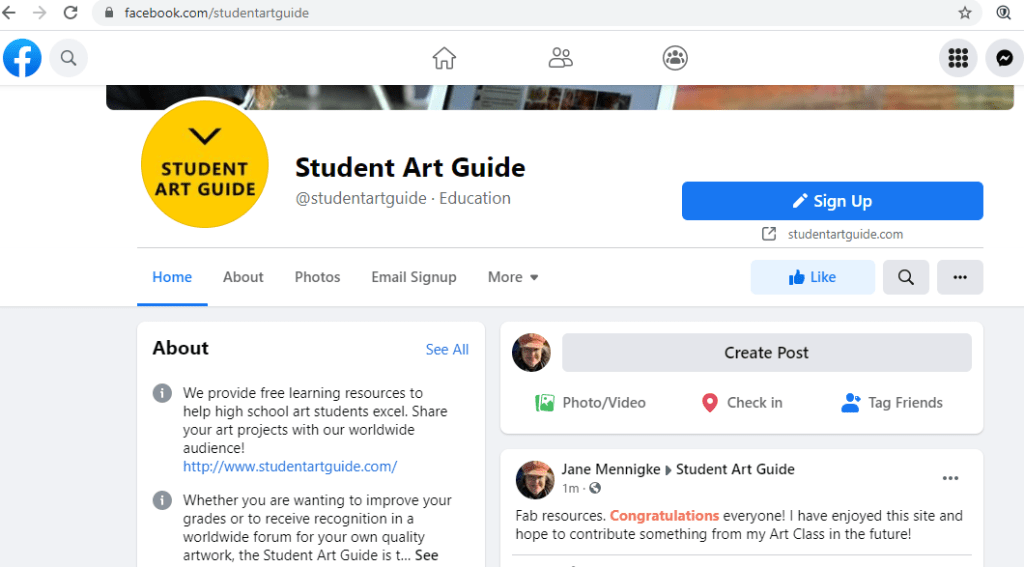
http://www.student art guide.com I signed up and created a post. I really look forward to contributing student art to this in the future. The benefits are for students and teachers in that they provide a variety of free resources and examples to show and inspire both A Level practical art in various media but also research-based themes and student reflections and art journals.
Teaching Tips and Online Instruction Platforms / learning Tech
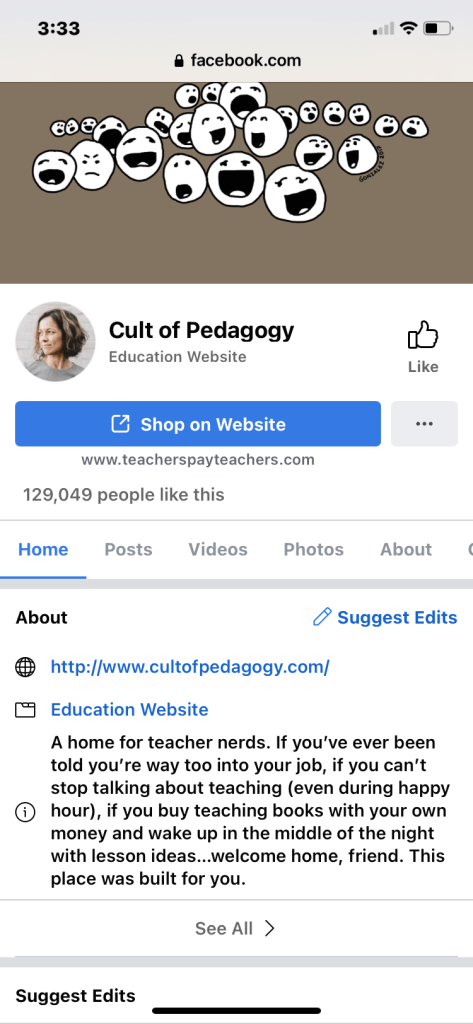
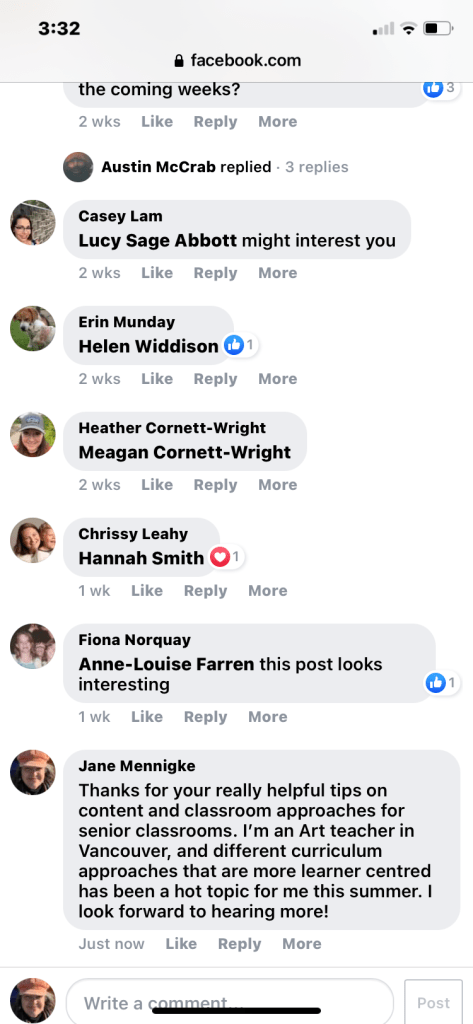
http://www.cultofpedagogy.com with Jennifer Gonzalez. This website is very user friendly and I was able to sign up for her FaceBook page and post a comment. The website focusses on best practice teaching approaches and is well researched. Honestly If I just kept abreast of all the material she has on education, curriculum and new platforms for instruction I would probably have half the networking and resources I could possibly use in a year.
_______________________________________________________________________________
Teaching Subject Area Network – Local Schools
Own Teacher Cluster: Although its not a new resource from this course, I started a teacher cluster in my area two years ago and we keep in touch two or three times during the term to exchange resources, look at new ways of assessment and talk about practical artwork projects and moderation of student work. We share gallery visit ideas, student competitions and we reach out for support when we are planning new sections of work. During Covid-19 this has all been online but the contact and exchange of ideas is valued. We use Google Classsroom as a sharing platform – and WhatsApp or Zoom.
__________________________________________________________________________
An Ontario Principal shares her learning, growth, and educational pursuits. https://bruynss.edublogs.org/author/bruynss/
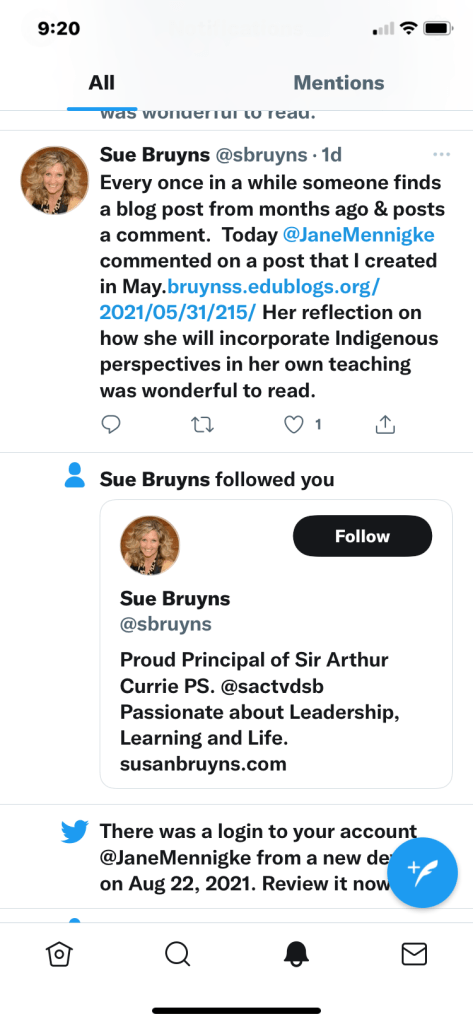
I responded to Ms Bruyns article on the disheartening learning barriers facing residential school survivors and younger generations. Learners with the backdrop of residential schools, who are retraumatized by the school environment and through ongoing evidence following the unmarked graves discovery in Tk’emlúps te Secwe̓pemc First Nations. Her appeal is to raise awareness of these learning barriers to engage creativity. In my post I reflected on the need for student centered curriculum approaches to change how students experience the classroom. I could have written of some more practical examples. This question I still need to fully engage with myself. There is a lot more I could do in my own classroom. I am not sure if she will respond or not.
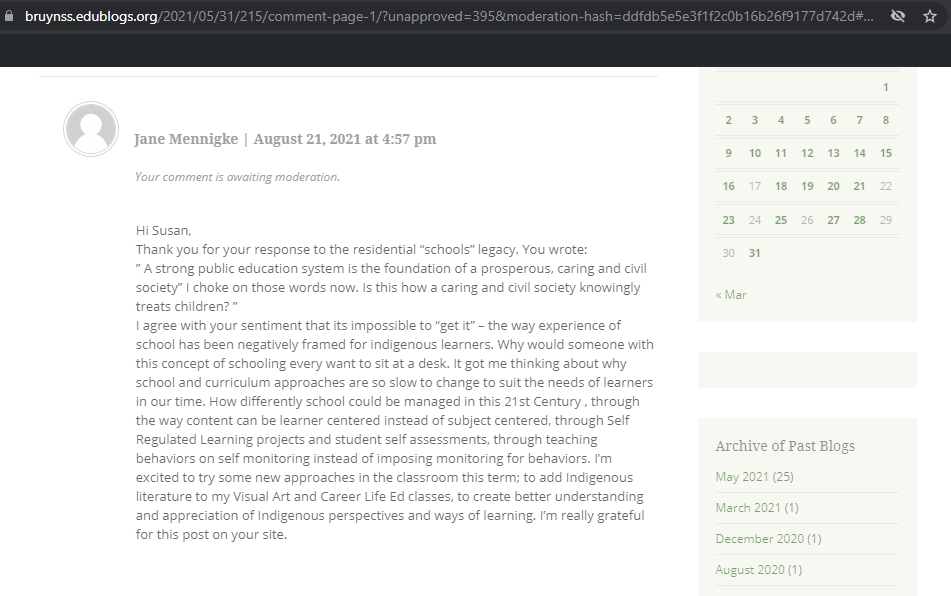
Oooooh! I was lucky! She responded to my post!
The responsibilities of being in a professional context on social media!
https://bruynss.edublogs.org/2021/05/31/215/#respond
______________________________________________________________________________
PLC – My School Context
Connecting with Indigenous ways of learning – two websites below. I would like to connect with material on this Website – so this is still a work in progress. I mentioned something from the previous module on wanting to incorporate Indigenous literature in my professional learning context (PLC) – Teacher Group within my school. This idea was based on the article by Susan Florio-Ruane on using autobiographies to engender understanding and respect for cultural differences in teaching and learning contexts for teachers. So I felt that resources from these sites below would give me a way to approach this, and would help me adapt this idea of using the biographies in classroom projects as well afterwards.
School discussions on curriculum – in my experience – tend to focus on what is expected of teachers and what is expected of schools; of the regulated commitments. So from the readings and form of this course – my big take away is that I think from now on I will feel more confident to ask questions or invite discussion about with how are we (teachers) are adapting curriculum expectations with the different Curriculum Approaches in mind, different educational biases to keep track of, and as a living tool and not a static list of instructions. I think Watson, C. (2014) makes a useful point about teachers as agents of change in schools. Indigenous Peoples Principles of Learning – are models for ways of informing Planning, Instruction and Assessment in a very organic way – so I would like to look at this and see what the overlaps are and how terminology changes as a result. Covid-19 had a significant impact on the mental health of students and teachers – so I think that these pressures will have changed the dynamics of conversations about curriculum approaches in new ways. It will be a good place to start the school year.
As further Resource from our Module 5:
Indigenous Ways of Knowing and Learning in Education – Home (weebly.com)
http://onnetwork.facinghistory.org/ What does facing history mean? This blog shares educational thoughts on realizing what reconciliation means. There is a lot to learn here.
Closing – General Comment:
Art resources and Websites — There are many wonderful resources available for art teachers and the problems are not so much what online resources, networks or even what contacts within the art community to use, but the the question is the how. How best to use these resources to increase my learning as a teacher, or to scaffold different selected resources for maximum benefit to students? Teachers are sifting through websites and helping students by narrowing down the search for appropriate material, with the maximum connections to subject content, and with a degree of authenticity and academic credibility – usually in many different areas at once. This course has helped me reflect on new resource materials available through social media platforms, and my interaction with them is an ongoing educational challenge. I recognize that that my contribution to student learning could improve if I took advantage of the social networking platforms to engage with new topics or ways of teaching and learning. Since – as teachers – we are really modelling this use for our students as well – and so where better to learn how to use this responsibly, creatively and as trying-to-be-sane contributers’ in our topsy-turvy world.
References:
Ornstein, A. C. (1990/1991). Philosophy as a basis for curriculum decisions. The High School Journal.
Florio-Ruane, S. (2001). Teacher Education and the Cultural Imagination. Autobiography, Conversation and Narrative. Michigan State University.
Sowell. E. (2005). Curriculum, an Integrative Introduction. 3rd Edition.
Watson, C. (2014). Effective professional learning communities? The possibilities for teachers as agents of change in schools. British Educational Research Journal.
 Songololo Times