Welcome to our Infographic collaboration to expand understanding of readings and approaches! Each slide has an explanation at bottom left.
Jane Mennigke and Cherise Mayerle GDPI/PME 810 (Aug.2021)
Introducing Assessment through visual representation:
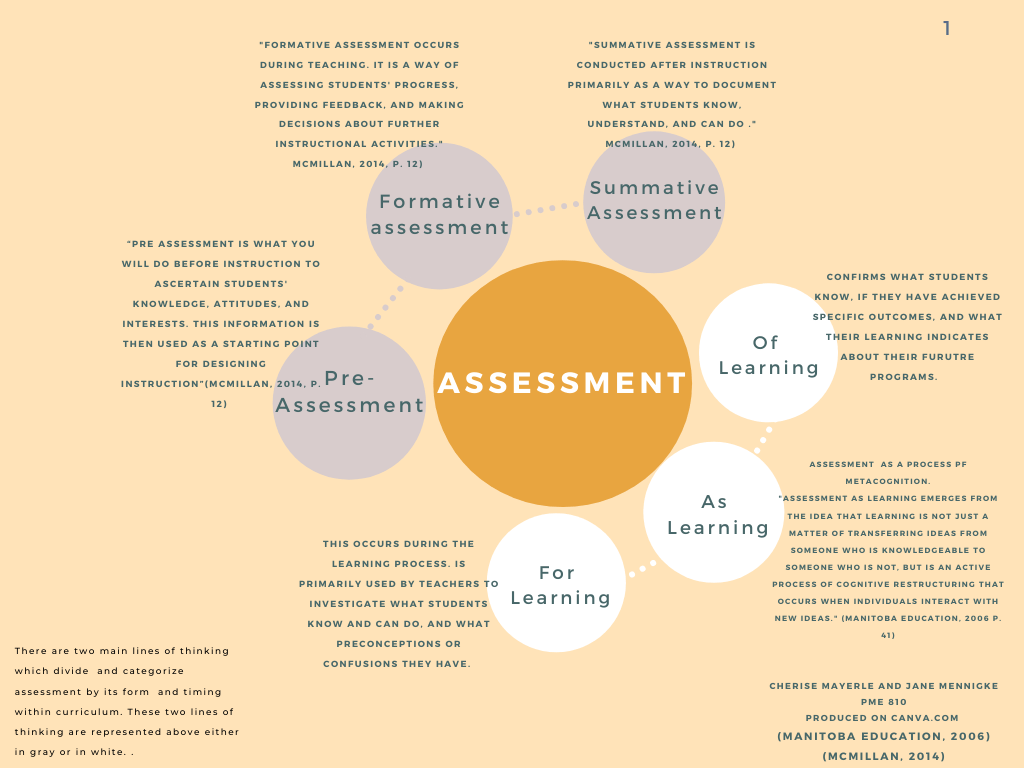
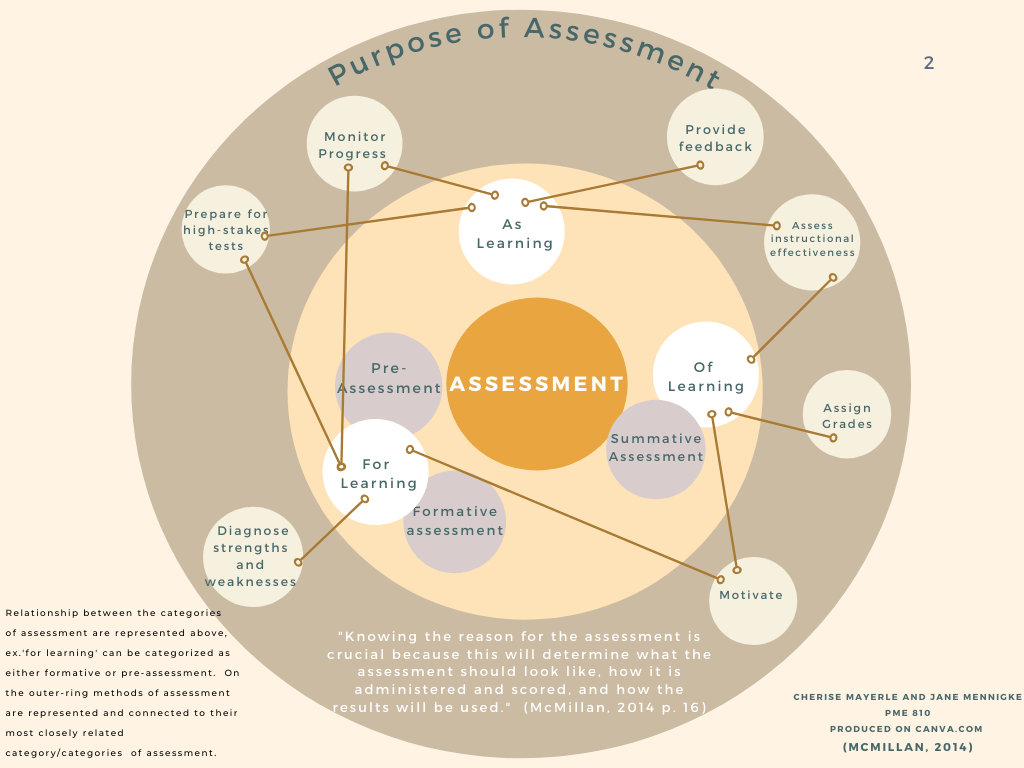
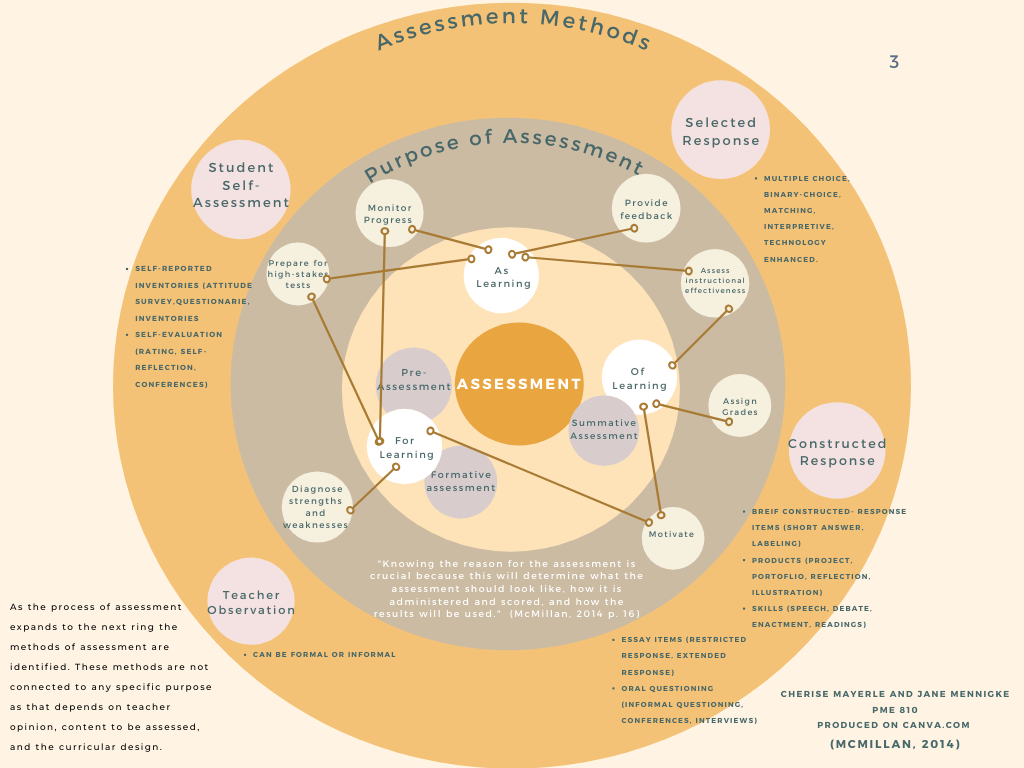
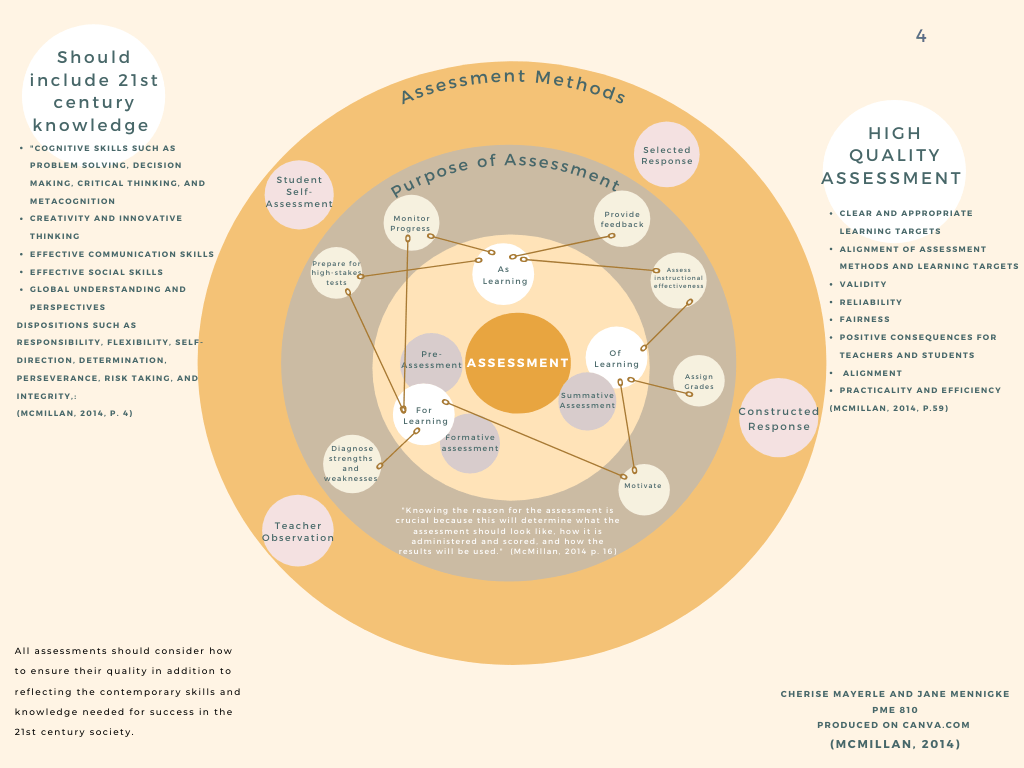
Assessment is an integral and powerful instrument for educators. When implemented carefully it can enhance learning and inspire learners to further inquiry. Shepard (2000) points out the danger of assessment when student’s fake competence and real learning becomes disconnected from assessment. For these reasons it is essential for educators to understand different perspectives and be versed in the contemporary research supporting their practices. The attached infographic begins by depicting two perspectives regarding assessments, one perspective divides assessment into summative, formative, and pre-assessment categories. The second perspective divides assessment into assessments for learning, as learning, and of learning. The diagram on page two depicts the relationship between the two perspectives. This helps to further understand their connection concerning the purpose of assessment. Slides three through four further develop important aspects of assessment such as methods and influential concepts. It is our desire that these diagrams emphasize the need for educators to evaluate their assessment approaches and better use assessment as the powerful instrument it is.
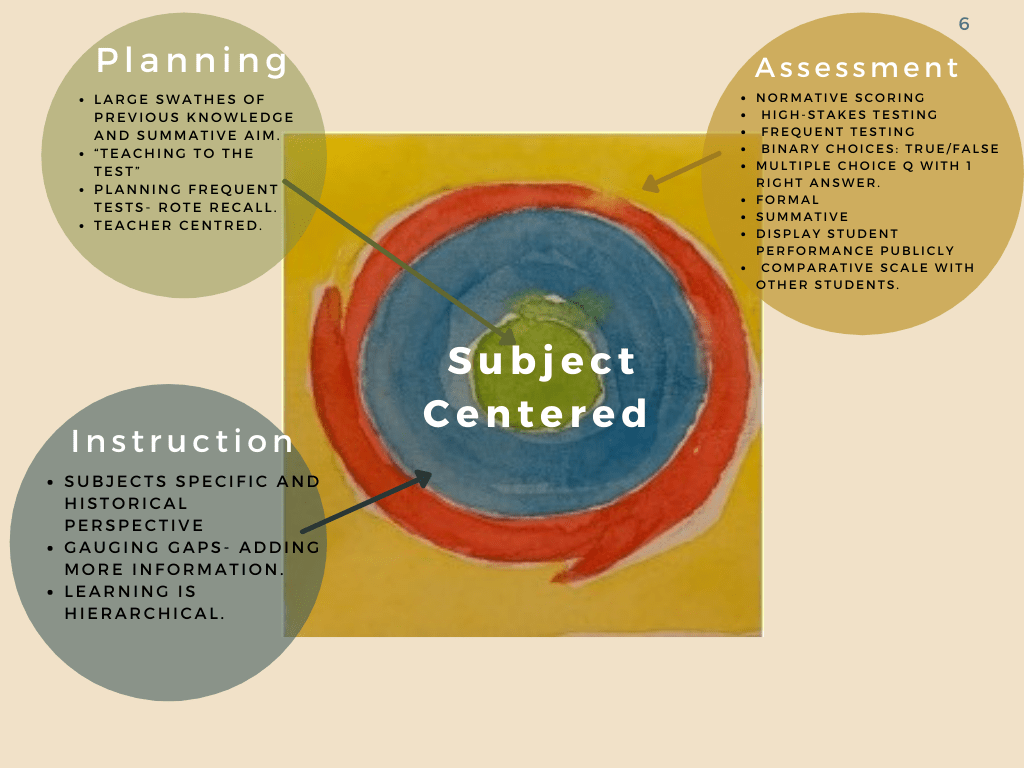
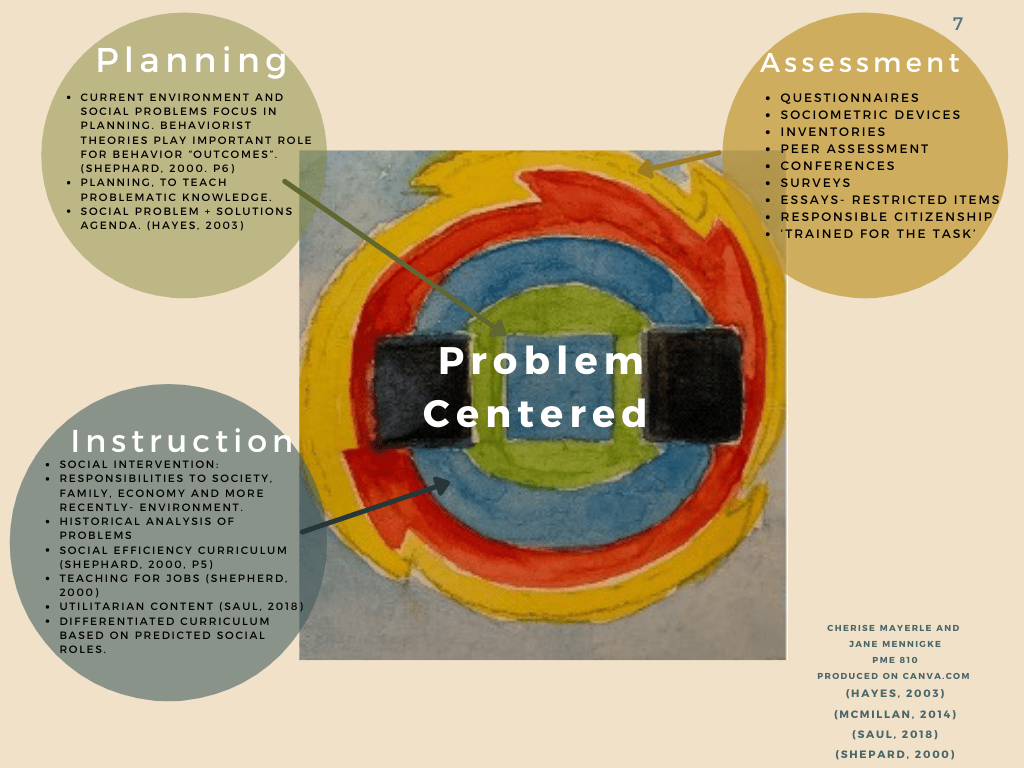
Slides five through six reflect the interconnected relationship between planning, instruction, and assessment within learner centered, subject centered, and problem centered curricular designs.
Each slide has an explanation at bottom left.
Reading the Visuals below: Approaches to Curriculum: Planning, Instruction and Assessment. (Planning Phase = Green, Instruction = Blue, Learner Performance = Red, Assessment = Yellow).
To describe a Learner Centered approach in curriculum, we started with green at the center indicating the Planning Phase. This fans outwards in a spiral into Instruction Phase indicated in blue. The Instruction Phase fans out into an additional phase – which we called a Learner Performance Phase, indicated in red – marking the beginning of the Assessment Phase in yellow. Planning/Instruction/Assessment in a Learner Centered curriculum follows different strategies from the other two models (Subject Centered or Problem Centered)
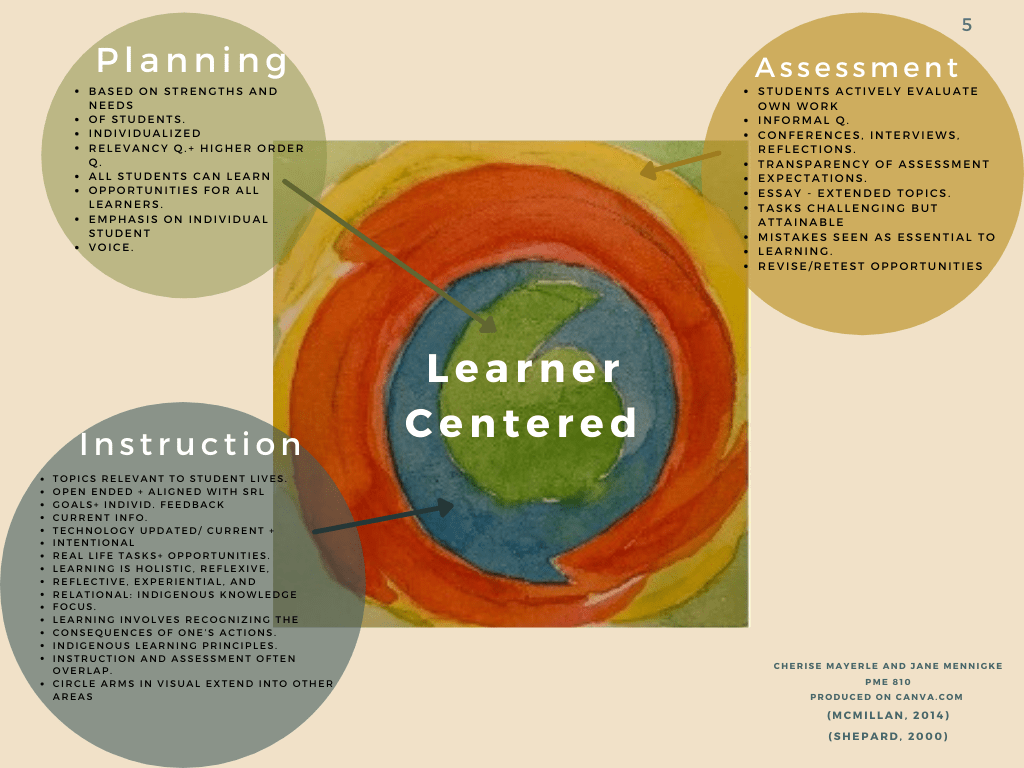
Overlaps occur, ( circles move into the next) when the different phases appear to move into each other indicating a cyclical, activity-oriented process in the visual. More fluidity evident between phases in the Learner Centered model. Also, as seen above, the Learner Performance Phase (red) is larger than the Assessment Phase (yellow); this is very different if you compare this diagram with the Subject Centered Approach diagram below, which has a dominant Assessment Phase (yellow), and the same diagram also has less overlap between Planning Phase and Instruction Phase which are seen as separate and very specific. Also, less overlap with learner performance (more emphasis on teacher performance and student mastery).
In contrast, a Problem Centered Approach, seen in the visual below- shows the Planning Phase is immediately focused on problem solving – with a social reconstructivist agenda – indicated by the blue and black squares. Here teaching-to-the-test and outcomes based approaches are favored. Square shapes “interrupt” the Planning Phase (center), The Instruction Phase (blue) and Learner Performance Phase (red); as a wave to Ralston Saul’s video, about utilitarianism in education, resulting from a thorough overplay of standardized testing. Perhaps it’s a little unfair but it did help us remember the distinctions – the cog-like wheels of Assessment Phase (yellow) and the return to Instruction Phase (blue)! This contrasts with the Learner Centered Approach (Top diagram), which moves from Assessment Phase straight back into Planning Phase in a cyclical motion, as goals get adjusted and refined with learners, and there is more overlap between phases, as students play an active role in planning activities and assessment.
Finally: The designs made us much more aware of aspects of each approach that work well, and those that don’t, and why. The impact of using assessment – simply as a tool for comparing learner capabilities – rather than as an indicator of gaps in learning – became more apparent through studying the different approaches; Ideally all three phases should contribute to provide learners and teachers with varied options for changes in educational strategy and to enable motivation. The readings and reflections added questions we can ask ourselves about what an assessment is for, and at which stage of a unit do we want to engage learners with further planning, and involve them in instruction and as facilitators of learning, which we can help monitor.
We hope you enjoy all the visuals!
Jane Mennigke and Cherise Mayerle / Approaches to Planning, Instruction and Assessment. PME, 2021.
 Songololo Times